PROJECT: INTERNATIONAL AIRPORT INFRASTUCTURE
CLIENT: Iraqi National Investment Commission
location: Karbala, Iraq
SIZE: 45000 SQM
DATE: 2018
STATUS: CONCEPT PROPOSAL
ARCHITECTURE: FRANCISCO SALGADO RÉ, BRUNO ANDRÉ
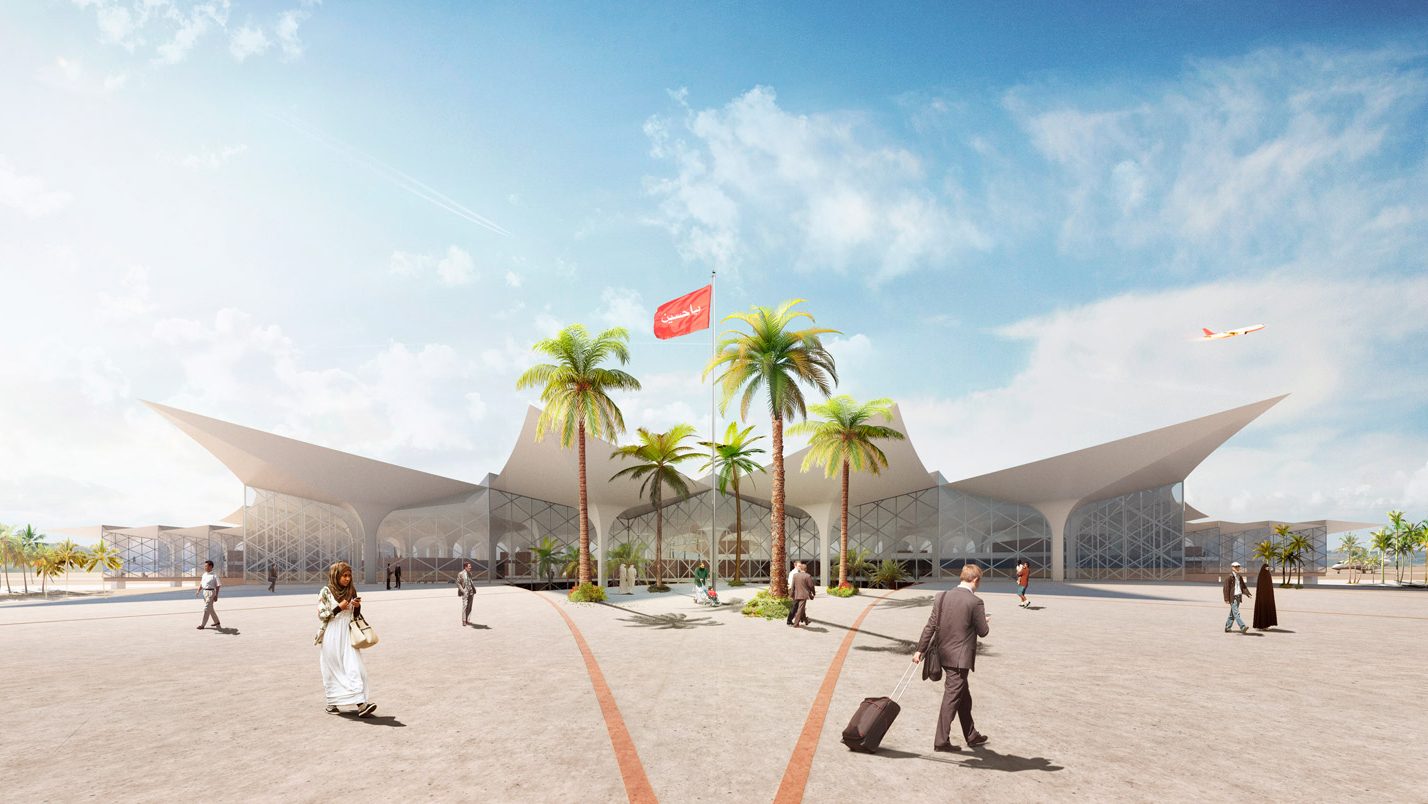
Karbala International Airport is located between Karbala and Najaf, about 35 km (22 miles) south of Karbala. With 4.5 km (2.8 miles), the airport’s runway will be one of the longest of its kind in Iraq. KIA will operate with the main purpose of serving the pilgrims of the Mosques of Imam Hussein and Abbas.
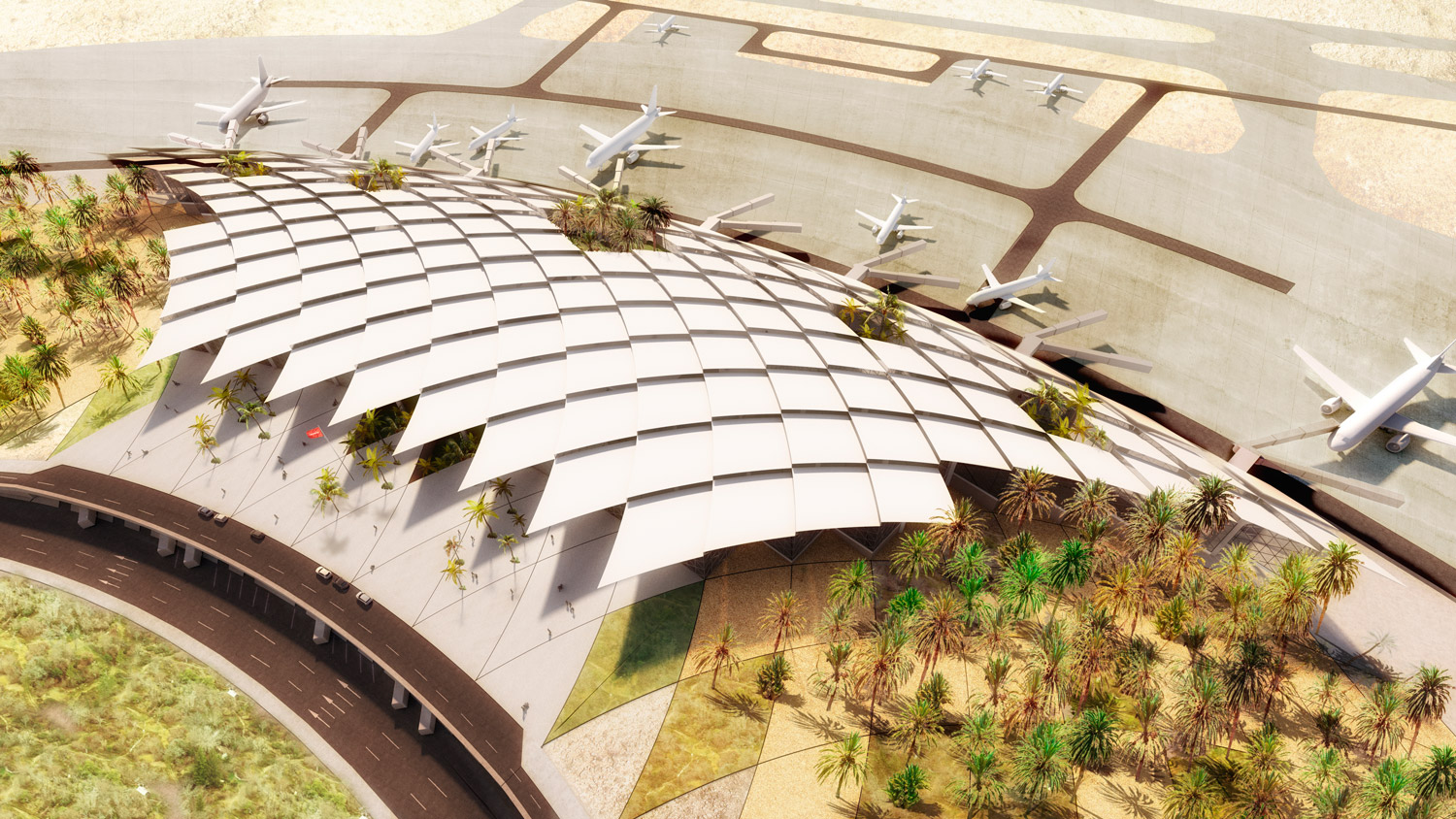
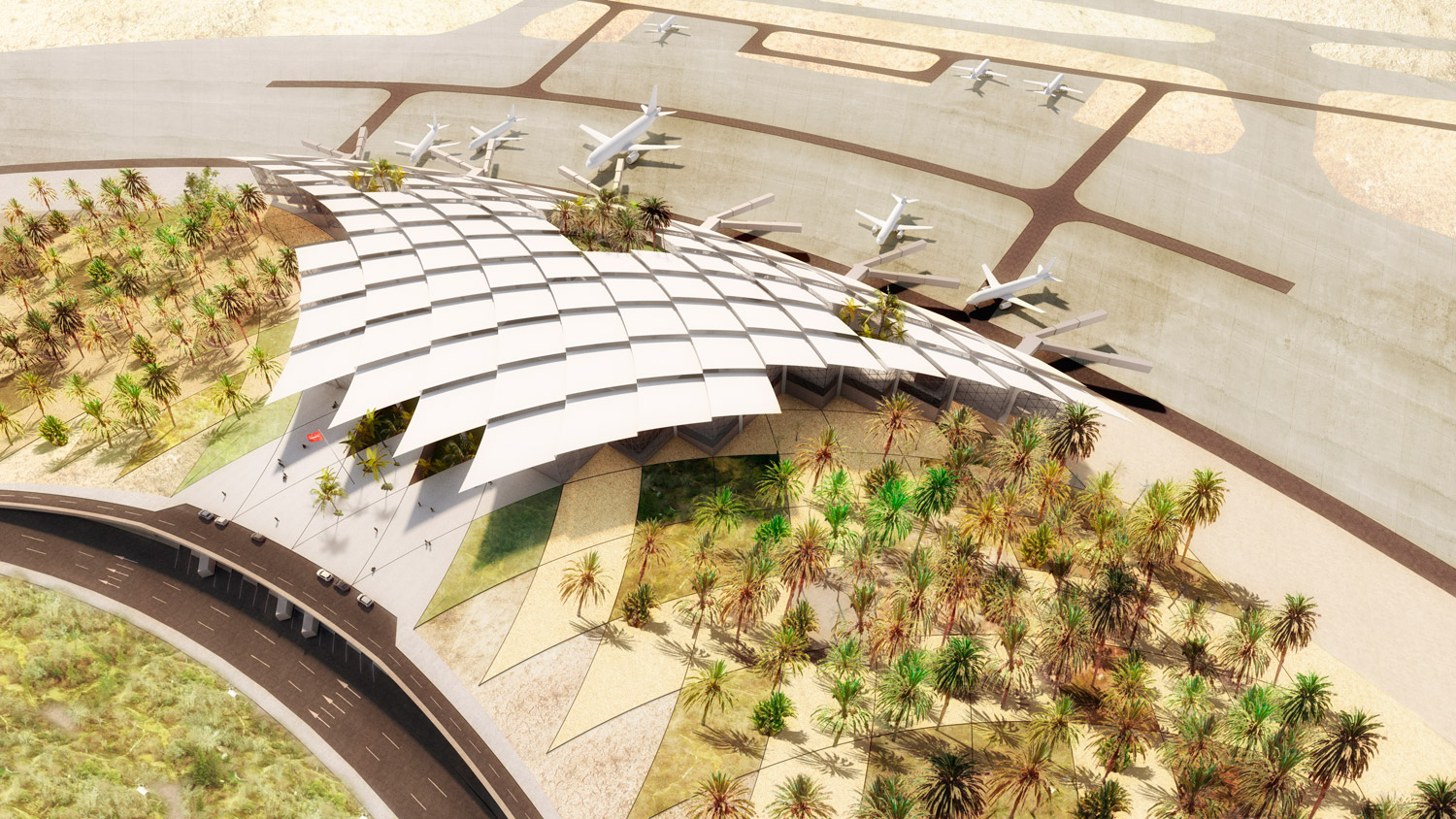
Created with expansion in mind, the first phase of Karbala International Airport Passenger Terminal Building represents a capacity of 3 million passengers per year. The design allows strategic growth of the infrastructure, based on a parametric modular grid, thus allowing a Second Phase representing a capacity of 6 million passengers per year. The strategy aims for the growth of the infrastructure in a logical organic expansion, that can be reajusted in size according future needs.
Karbala possesses an unequivocally historical importance and contemporary relevance in the Middle East region, where modern civilization was born. This is a place with a deep cultural richness, visited by large numbers of pilgrims that gather to pray and celebrate in this historic site. Considered as a holy city for Shi’ite Muslims as Mecca, Medina and Jerusalem. The project therefore reflects the importance of the culture of the region, creating an architecture with which visitors can identify and relate in a sensorial and spiritual level, making a eulogy to the cultural legacy.
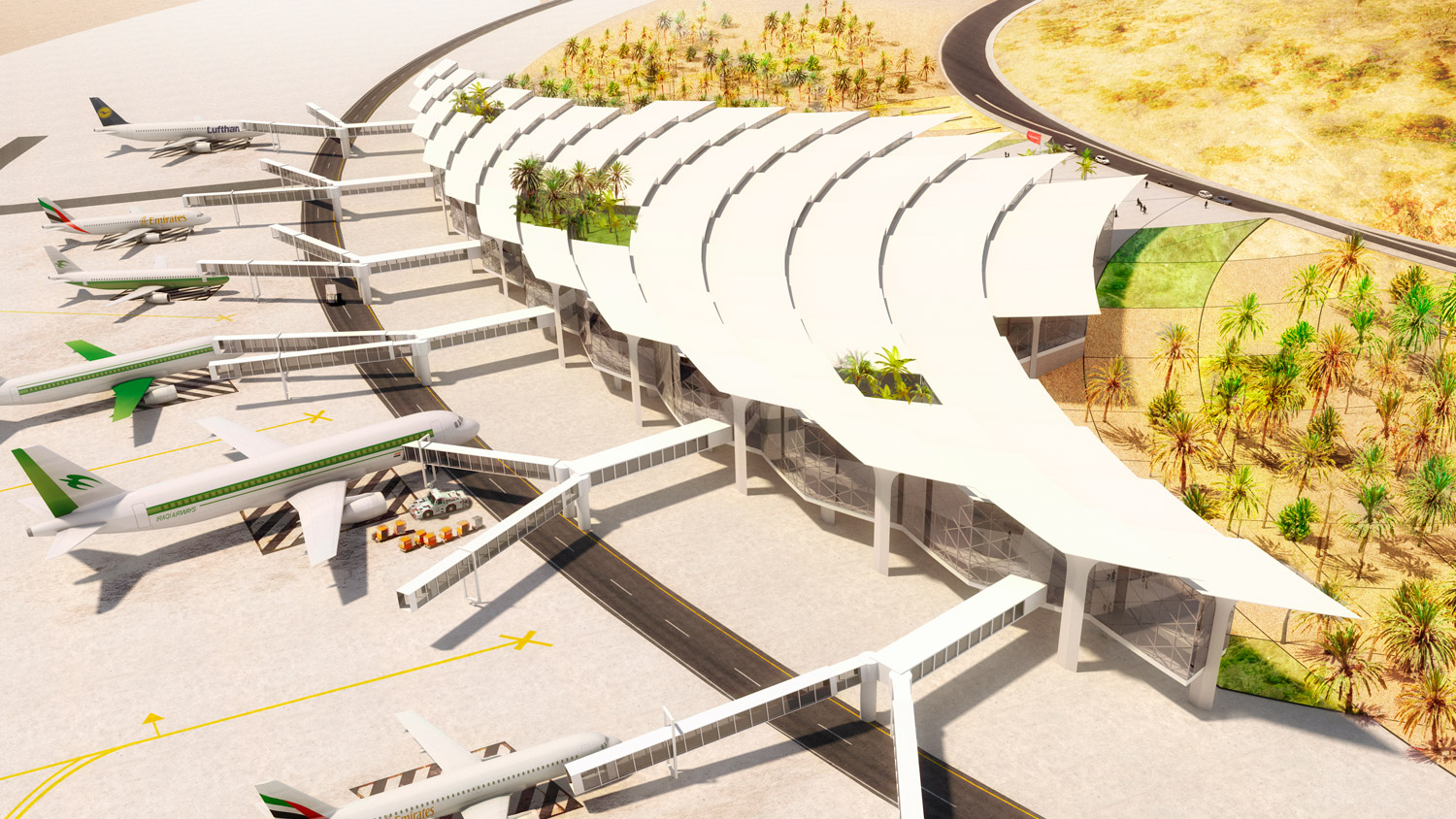
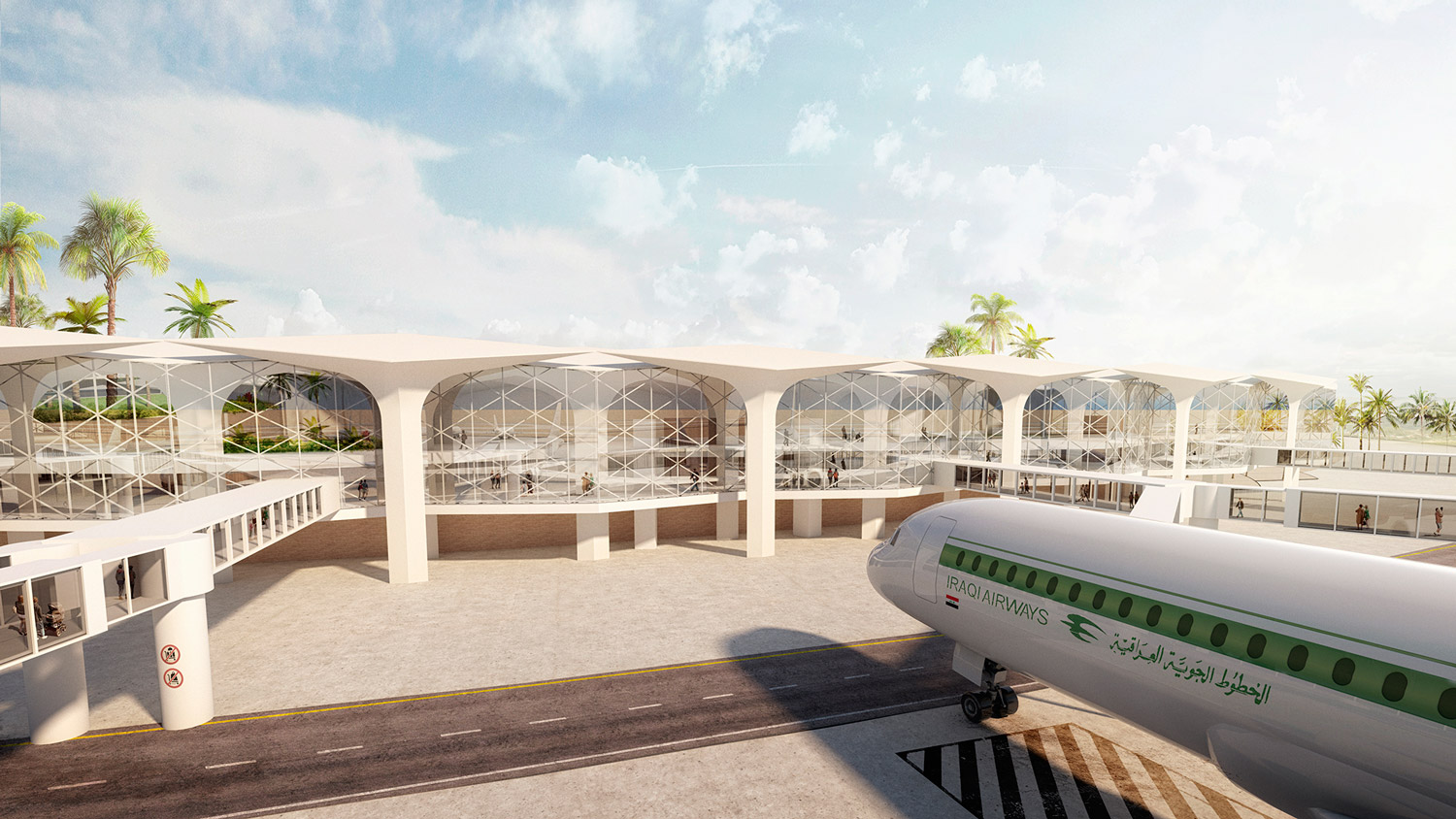
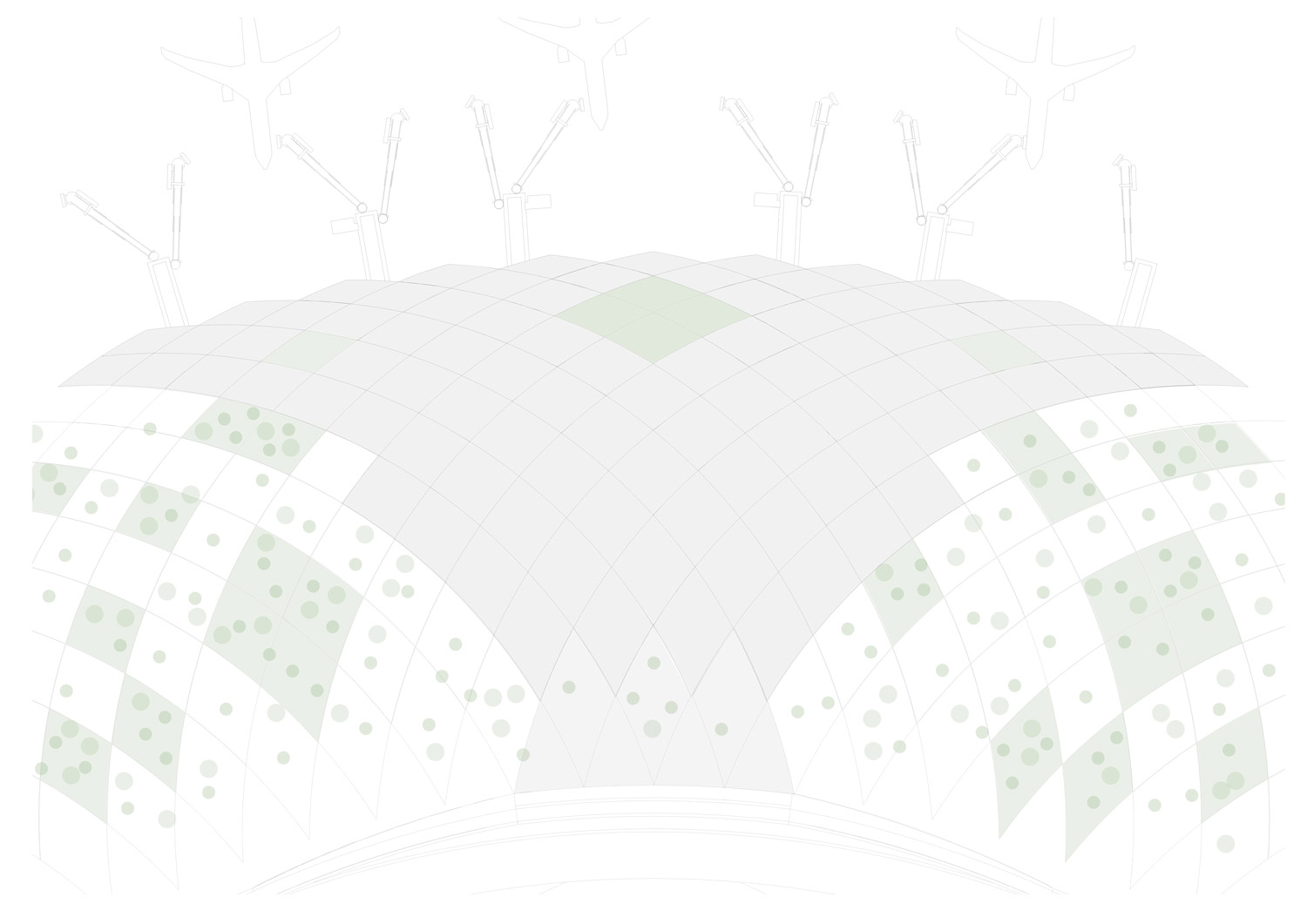
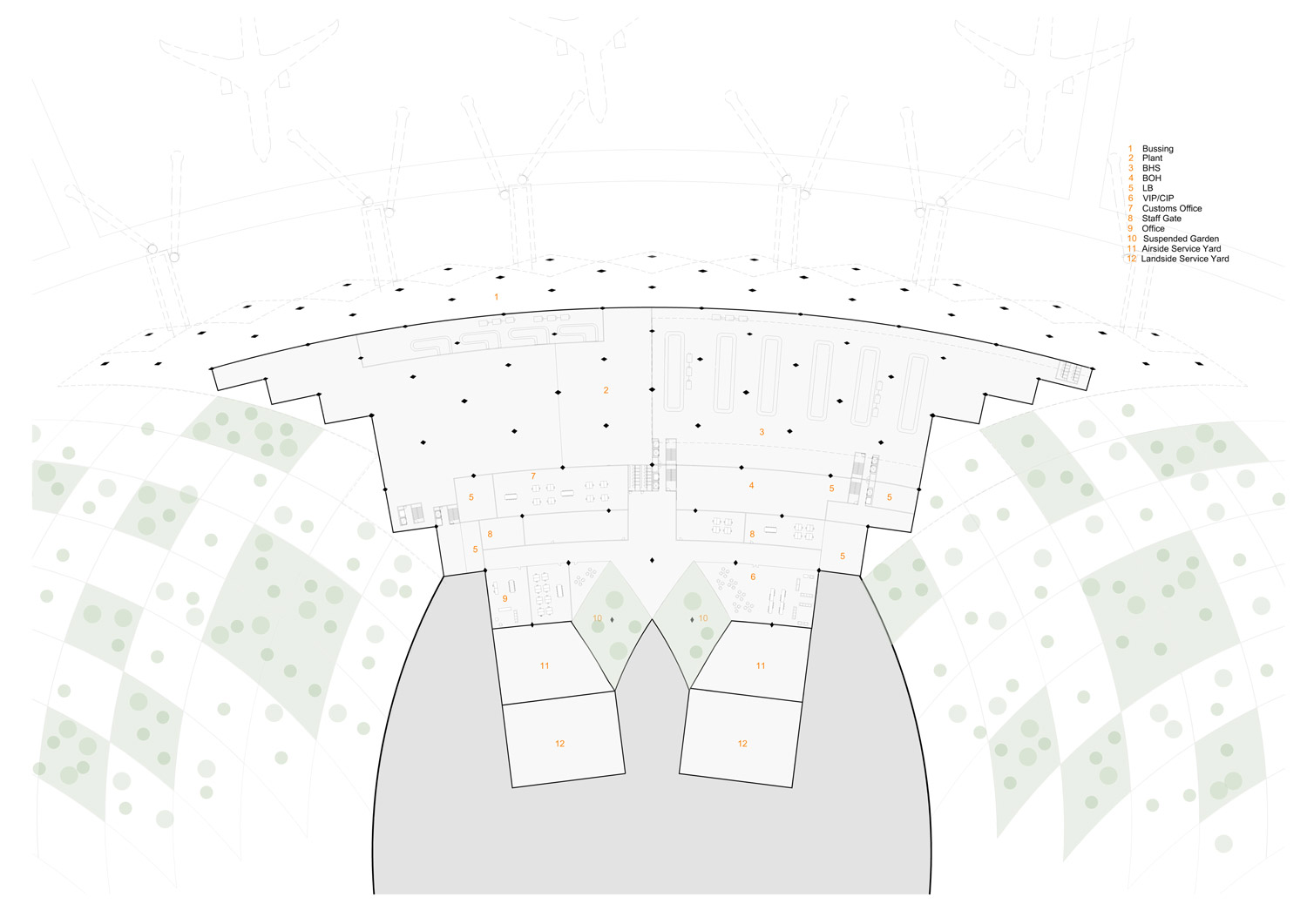
Hanging Gardens – in a clear reference to the Hanging Gardens of Babylon, the project incorporates an ascending series of gardens containing a wide variety of trees, shrubs, and vines. The name “Babylon” means “Gate of the Gods” in a perfect methaphor for this new gate to the sky.
Courtyards – Courtyards are a traditional Islamic characteristic, as a protection from the harsh environment of many Islamic geographies. Concentration on the interior rather than the outside of a building provides a space that is both outside, and yet within the building.
A Stair to Heaven – the rooftop is like a gentle stair, developing in an ascending dynamic that increases from the entrance through the building in the direction of the sky, like in a traditional Zigurat.
The Arch – The pointed arch cross-section of the connected palm trees is translated on to the facades as a series of arches, inspired by the traditional Iraqi and Islamic architecture.
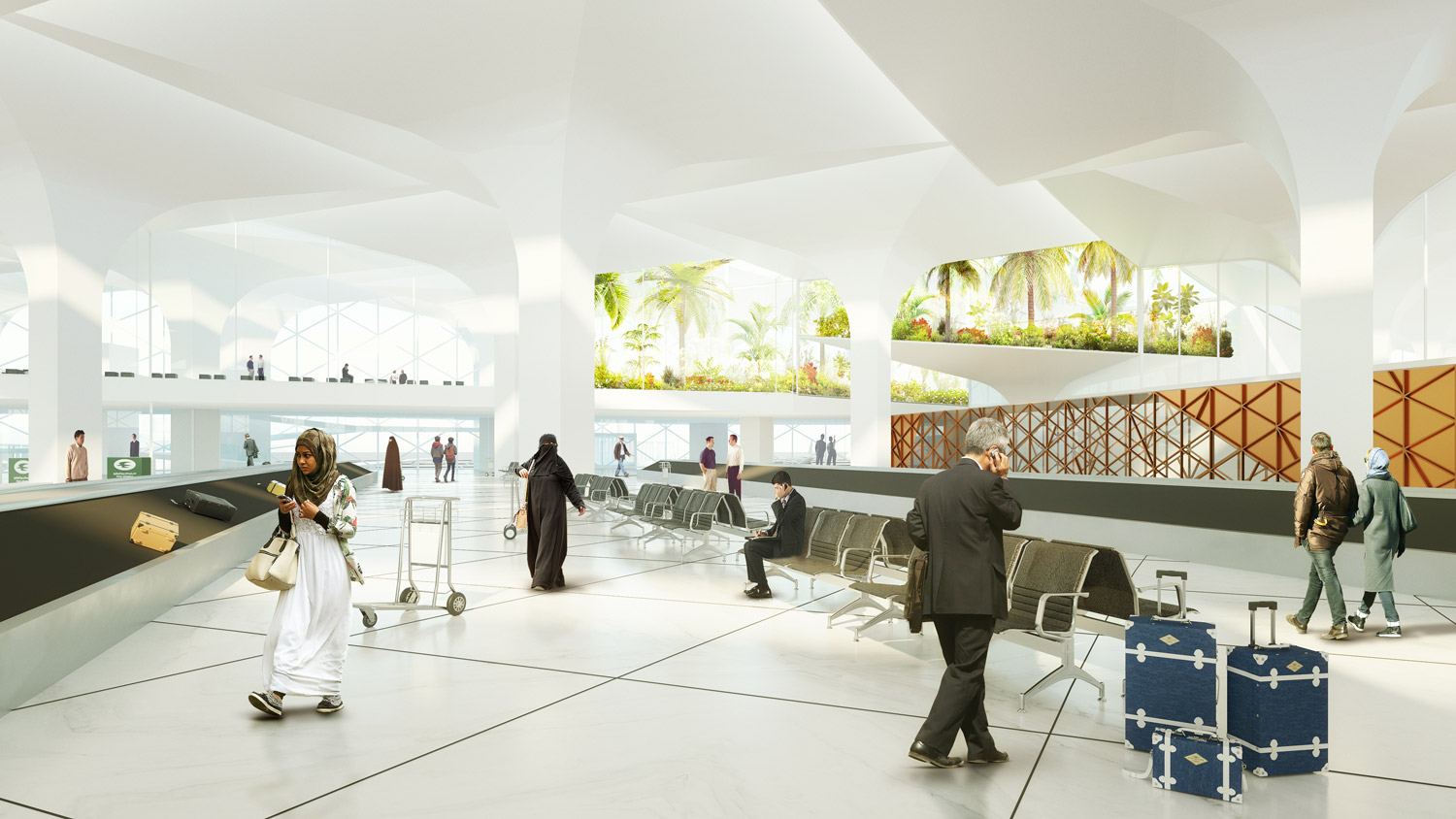
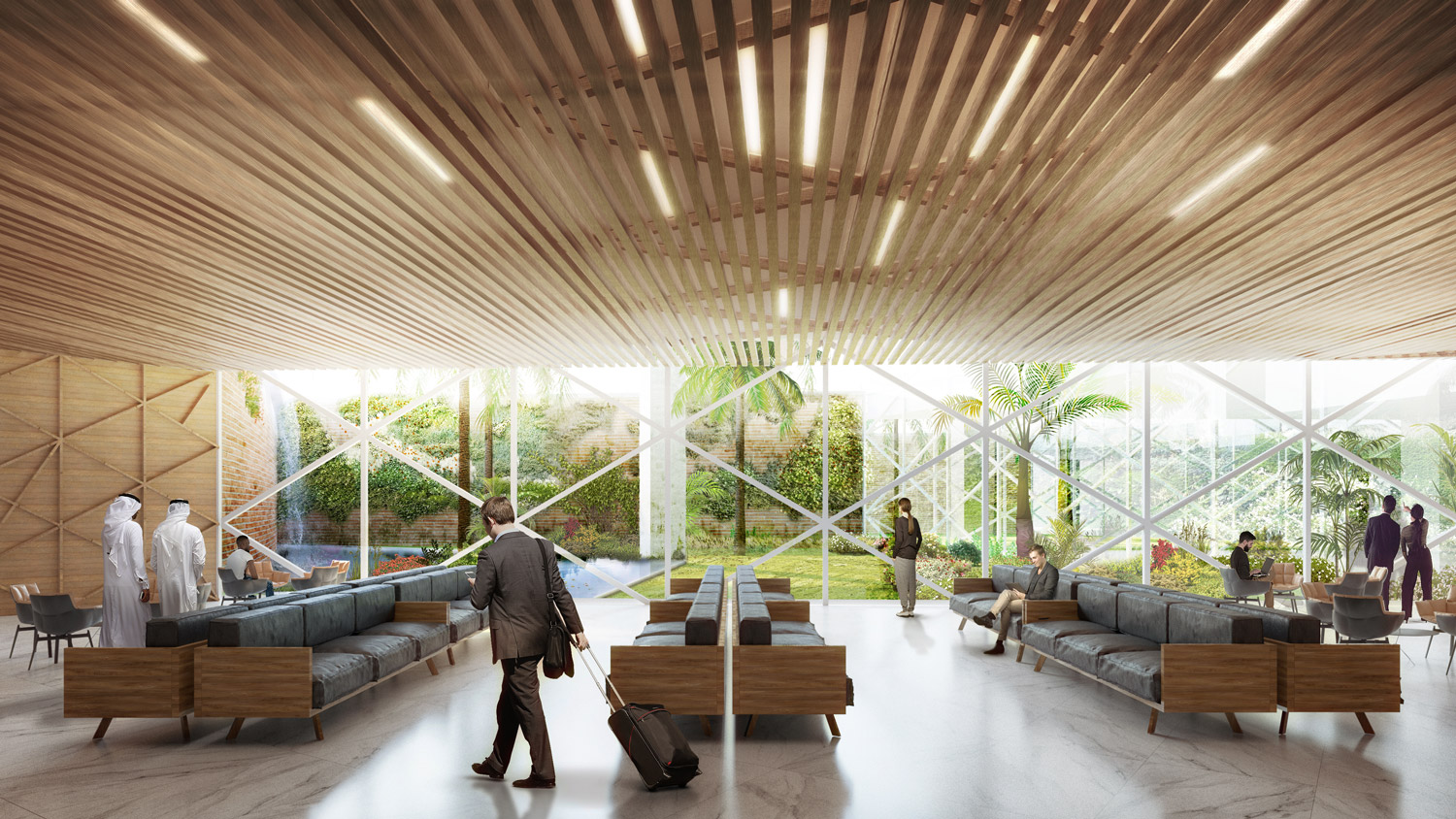
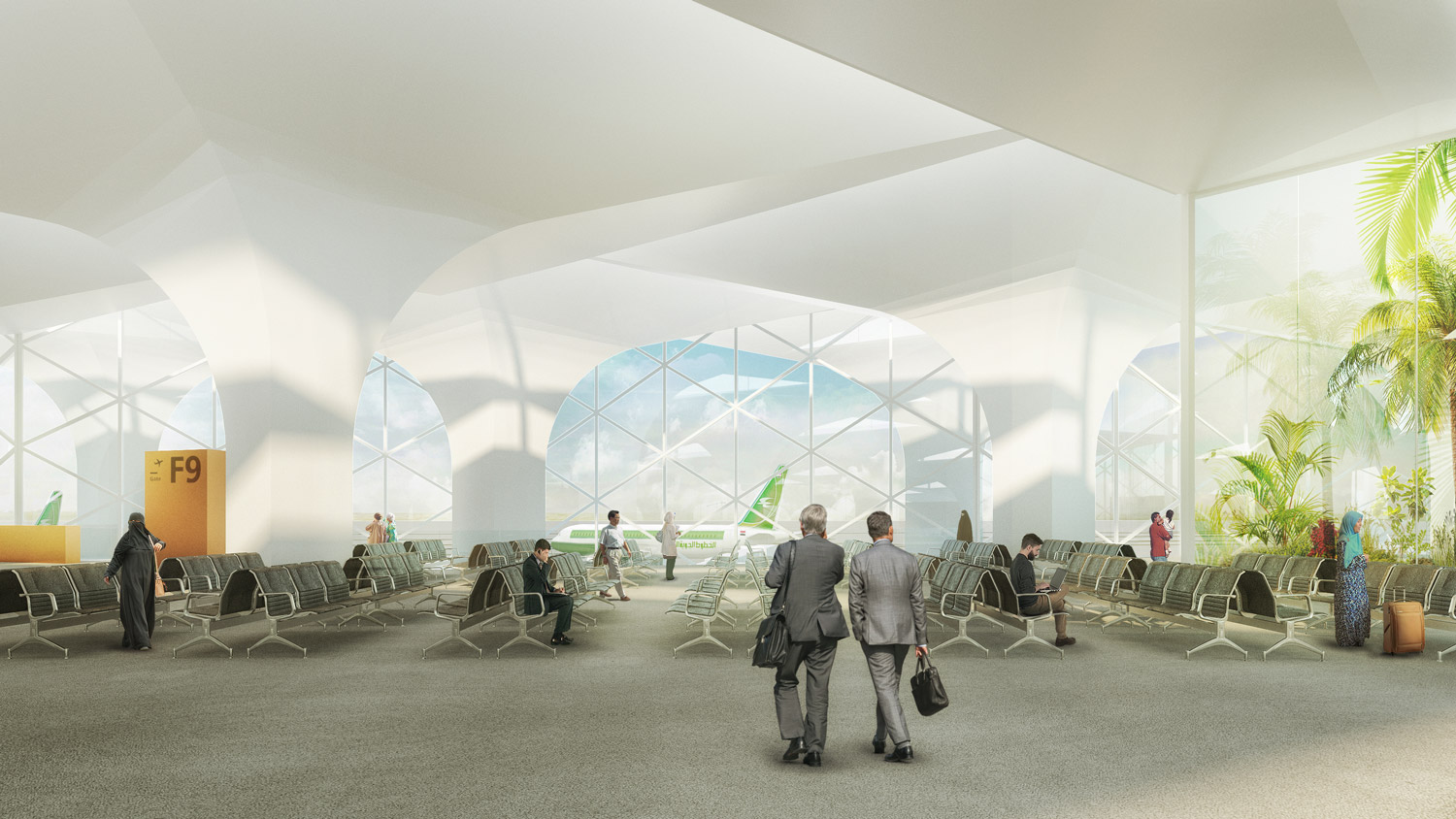
Geometry and Patterns – The shape of the building is directly inspired by the traditional geometry and textures present in Imam Hussein shrine in Karbala. The use of patterns is a form used by Islamic art to represent nature and objects in their spiritual qualities. The repeated geometric patterns often make use of plant motifs. The geometry is also influenced by the Islamic crescent and the circles represent the developing moon.
Holistic Palm Tree Oasis – “The whole is greater than the sum of its parts”. An oasis is only an oasis by the sum of its trees. The roof that defines the building is composed by individual structures inspired by trees. Each pillar is a symbolic trunk that sustains the protective top.